At a glance
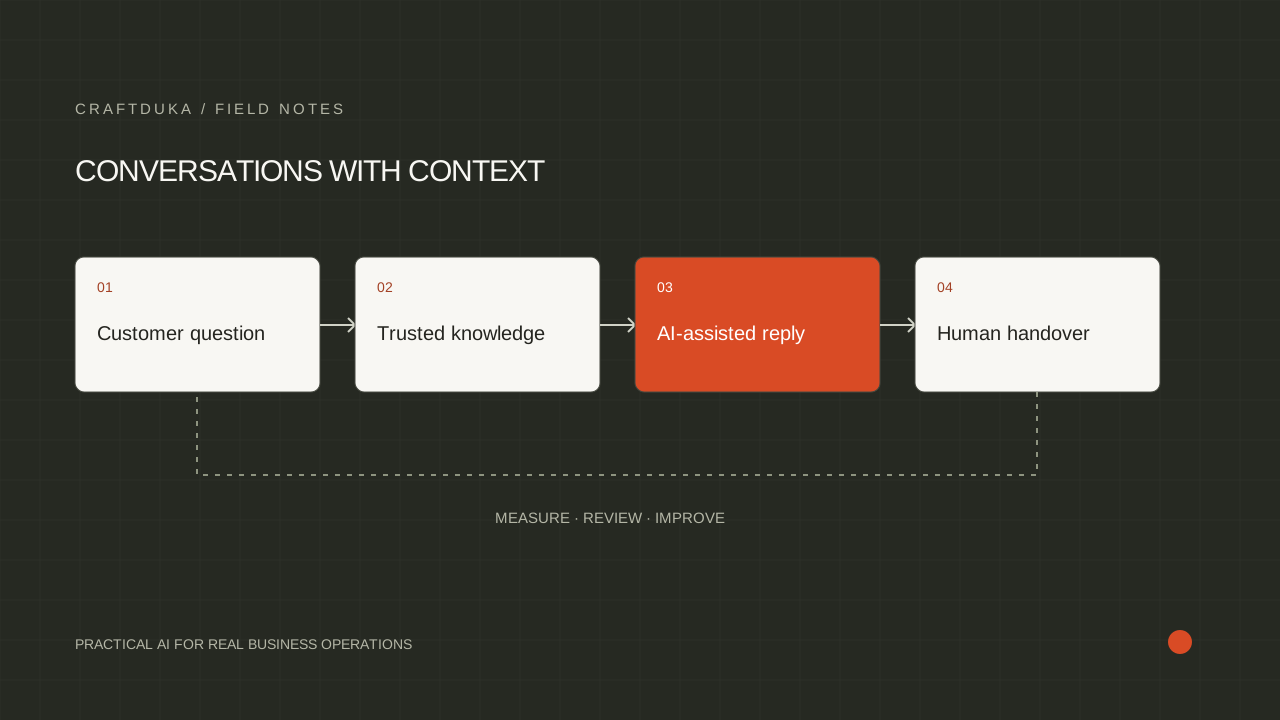
A useful WhatsApp AI support assistant answers from approved information and hands over when a person is needed. Design the knowledge base, conversation boundaries, agent queue, and measurement process together so automation improves the complete support experience.
Choose the support requests the assistant can handle
Review recent support conversations and group them by the work required. Opening hours, product information, and general process questions may be answerable from approved documents. Account-specific issues require authenticated access to the relevant system. Complaints, unusual exceptions, and requests outside policy may need a person from the start.
Define the first release around a manageable set of intents. For a Kenyan business, include the actual service locations, delivery language, and customer expressions found in your conversations. Do not claim broad multilingual capability after testing a few translated questions. Record which requests the assistant should answer, clarify, retrieve information for, or hand over.
Create a knowledge base your team can maintain
Write clear, approved answers for common questions, with the conditions and exceptions that change the answer. Separate policy from promotional copy so the assistant does not treat a campaign message as a permanent service promise. Give each document an owner and a review date. Resolve contradictory answers before making the material available to the assistant.
When an answer depends on live information, retrieve it from the appropriate operational system. An order status assistant should report a verified status or explain that it cannot currently access the information. It should not fill the gap with a likely delivery date. Keep the retrieved facts distinct from any wording the model generates around them.
Design a handoff that does not restart the conversation
Give customers a clear route to a person and define the conditions that trigger escalation automatically. These might include a repeated misunderstanding, a missing policy answer, or a request that needs an exception. WhatsApp's platform overview describes automated conversational flows and routing to live agents; the operating process still needs to be designed by the business.
Pass the agent a concise summary, the original conversation, relevant retrieved records, and the reason for escalation. Stop automated replies while the agent owns the case. Confirm to the customer that their request has been handed over, using response expectations the team can actually meet. A handoff without ownership simply moves the waiting problem.
Test conversations beyond the ideal question
Try short messages, spelling variations, mixed topics, follow-up questions, and requests that contradict an earlier statement. Check whether the assistant preserves context without confusing different customers or orders. Ask questions that have no approved answer and confirm that the system acknowledges the gap. Test what happens when the customer asks for a person directly.
Include the operating team in the review. An answer can be technically correct but unhelpful because it omits the next step or uses unfamiliar language. Evaluate whether the customer can act on the response, whether a follow-up is necessary, and whether the assistant avoids repeating information the customer already provided. Save difficult cases for future regression checks.
Measure resolved work and maintain the service
Track resolution quality, repeat contacts, escalation reasons, and agent correction effort. Separate quick acknowledgments from useful answers when evaluating response speed. A high rate of automated replies may conceal customers who abandon the conversation or return later with the same problem. Review a sample of both completed and escalated conversations.
Use recurring gaps to improve documentation, routing, or the underlying customer process. If customers repeatedly ask where to find an order number, the purchase confirmation may need improvement as much as the assistant does. Assign ongoing responsibility for content updates, queue coverage, and integration failures. The assistant is part of the support service and needs the same operational ownership.
- Make agent ownership visible to the system.
- Test the customer's path back to human support.
- Update approved answers whenever the actual service changes.
Key takeaways
- Ground general answers in approved content and account answers in authorized lookups.
- Make escalation easy and preserve context when an agent takes over.
- Measure resolution quality and repeated contact, not simply automated replies.
Frequently asked questions
Can a WhatsApp AI assistant replace a support inbox?
It can handle part of the work, but the team still needs a queue for exceptions, escalations, and unresolved cases. Design the assistant and agent inbox as one support process.
How should the assistant handle a question it cannot answer?
It should state the missing information, ask a useful clarifying question when appropriate, or hand the case to a person. It should preserve context and avoid inventing a policy or account status.
What should we measure besides response time?
Measure correct resolution, repeat contact, escalation quality, and the work agents spend correcting answers. Those signals show whether faster replies improve the customer's actual experience.